The Seven-Minute Rule: What the Arctic Will Teach You the Hard Way
From the frozen tundra, nroth Finland — Extreme Dreams: Arctic
Nobody briefs you about the first twenty minutes.
You've done the preparation. You've read the packing list three times. You've argued with yourself in an outdoor gear shop about whether you really need the $400 gloves (you do — buy them). You've flown to the top of the world, dragged your bag off the carousel in the dark, and stood outside for the first time and thought oh. OH. That's what cold actually is.
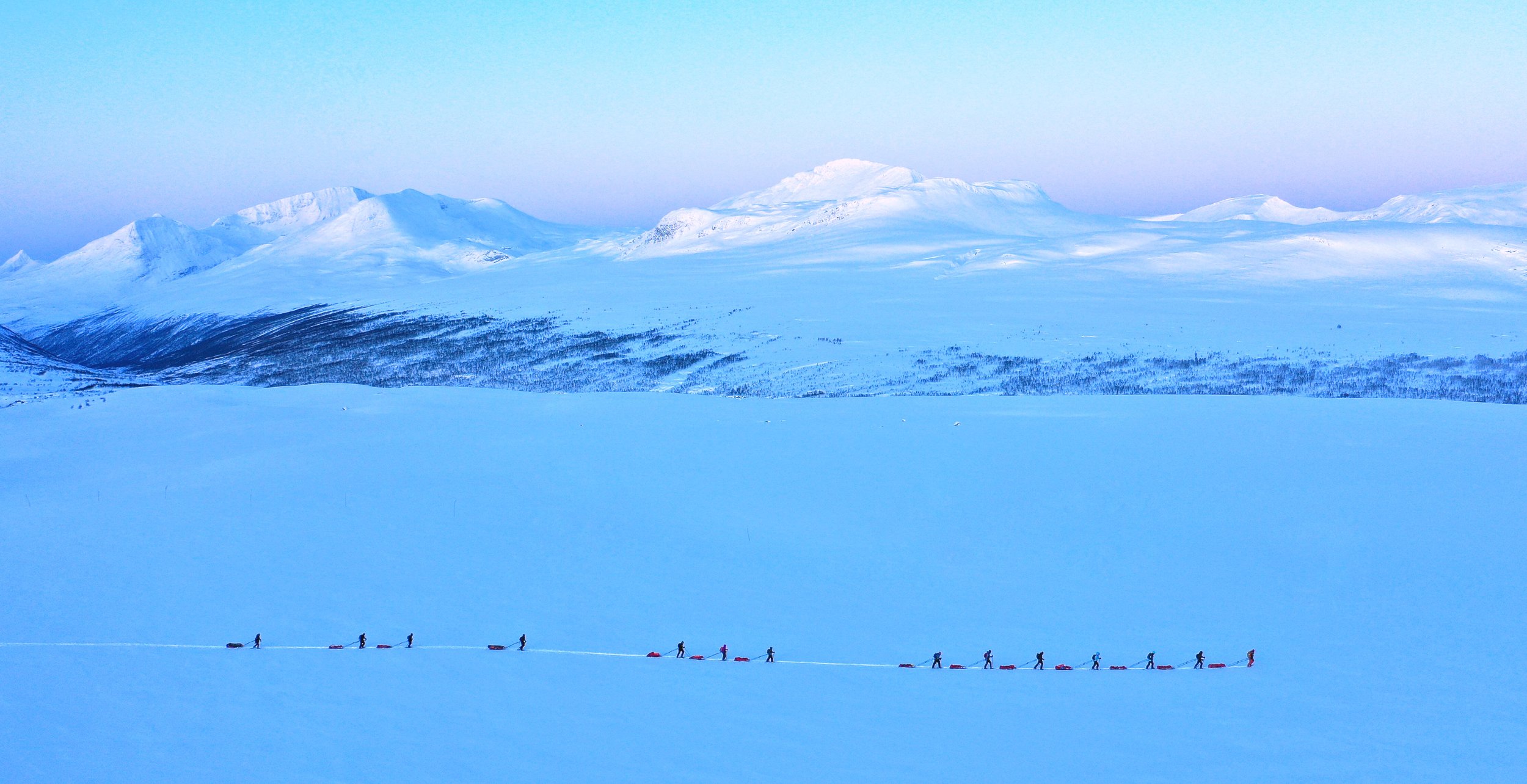
The traverse from Norway to Finland
And now it's morning. The kind of morning where the inside of your nostrils freezes the second you step out the door and the moisture on your eyelashes turns to crystals. You've swapped your big puffy camp jacket for your travel layers because you're about to start moving, and you clip into your harness and take your first steps hauling a pulk across the snow.
And then your fingers disappear.
Gone. Just gone.
Not frostbite — that's a different, more urgent kind of problem. This is something quieter and more sinister. Your circulation, faced with the combined assault of sub-zero air and the shock of exercise after a cold night, essentially shuts down the extremities. Your hands become dead weight. Useless. You stare at them through your glove liners like they belong to someone else.
On Extreme Dreams Arctic, we've had grown adults — tough, capable, experienced humans — look at their hands during this phase with a kind of panicked disbelief. "Is this normal?" Yes. Completely. Keep moving.
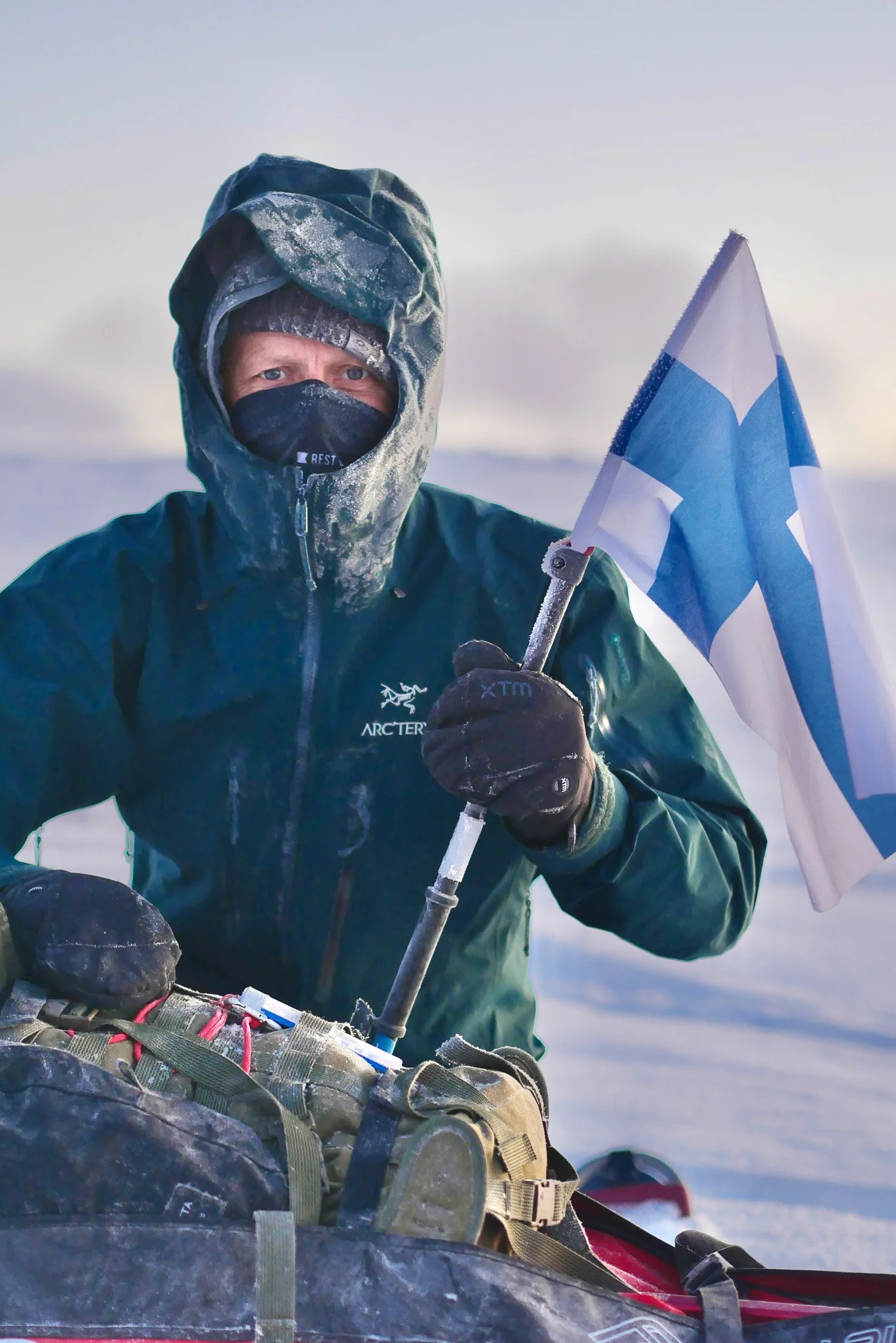
-37c is enough to keep you moving
Because here's what happens next.
After somewhere between twenty and twenty-five minutes of sustained effort — actually moving, actually working, legs driving, lungs filling — the core warms up enough to start redistributing heat outward. Blood begins to return to your fingers. You start to feel them again.
And then they absolutely lose their minds.
The screaming barfies
Ice climbers have a name for it. The screaming barfies. It's exactly what it sounds like.
The returning circulation hits your hands like a wave of hot needles. Metabolic waste products that have been building in the tissues during the shutdown phase get reabsorbed all at once. It is genuinely, surprisingly painful. Some people go white. Some people make noises they'd be embarrassed about in polite company. All of it is completely normal.
And then — just like that — it's over. Your hands are back. Your body is warm. You are moving through one of the most spectacular frozen landscapes on earth, and you feel absolutely magnificent.
The first twenty minutes are the price of admission. Everyone pays it. The trick is knowing what's coming.
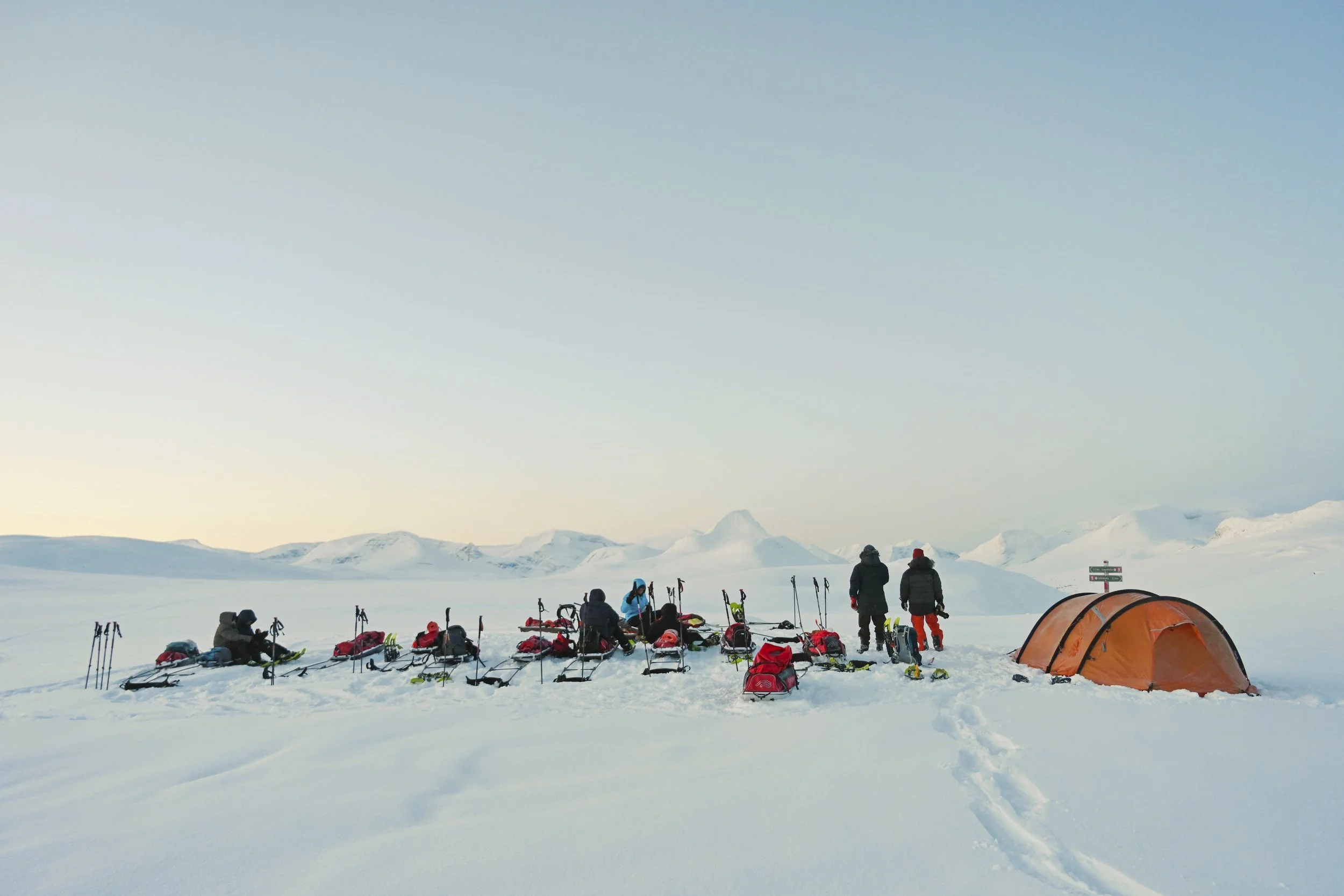
Stop, eat, repack, move on
Why seven minutes matters
Here's the bit that catches people off guard.
Once you've paid that price and found your rhythm, you never want to pay it again. And you won't — as long as you keep your rest stops short.
On a full Arctic travel day you need breaks. Hydration. Calories. A very undignified moment behind a snowdrift. Maybe a few seconds to let your back decompress and look up at the sky and remember where you are. These stops are not optional.
But stop for too long, and your exercise metabolism stalls completely. The internal furnace goes out. And if that happens, you are back at minute zero: dead fingers, twenty-five minutes of suffering, and the screaming barfies — all over again.
The threshold, borne out by the experience of people who have spent serious time in serious cold, sits at around seven minutes. Stay under seven minutes, and your body holds enough residual warmth to keep moving efficiently. Go past it, and you pay the tax.
Seven minutes sounds generous until you're trying to do everything in seven minutes. Throw on your warm layer. Wrestle your thermos open with gloved hands. Drink without burning yourself or freezing your lips. Eat something. Pee — which is its own adventure at -40°C. Get your outer layer back off. Harness on. Moving again.
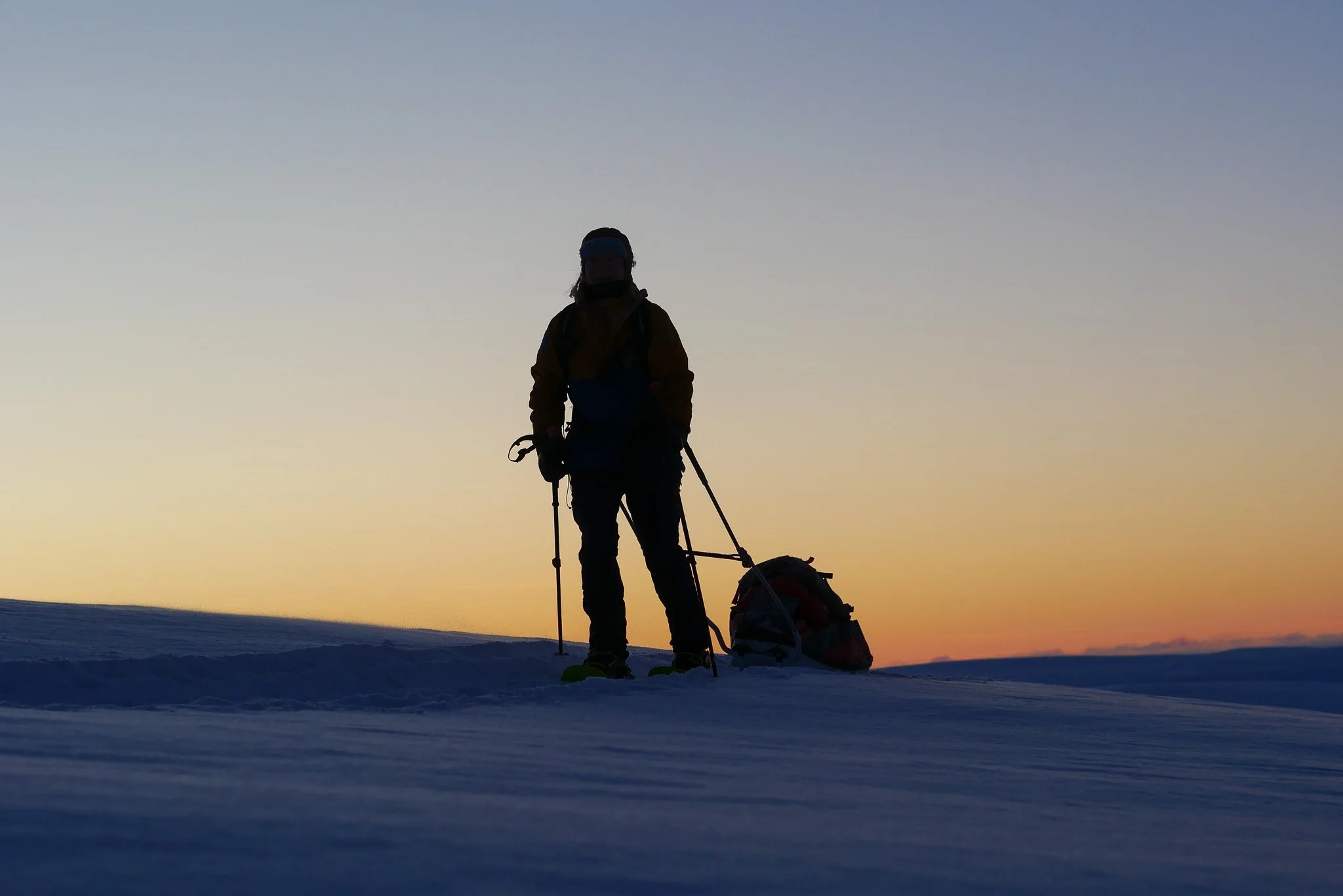
Back to hauling your pukla
It's a masterclass in efficiency. No scrolling. No lingering. No "just another minute." You become extraordinarily good at doing exactly what you need to do and nothing else.
What the Arctic is actually teaching you
This is the thing about Extreme Dreams Arctic that I find hard to explain to people who haven't done it.
Yes, there's the Northern Lights at midnight and the silence that presses in on you like something physical and the dog sledding and the ice bath and the salty liquorice and the ridiculous, wonderful, life-affirming absurdity of being a warm-blooded Australian mammal in a place that cold.
But underneath all of that is a rhythm. Move. Rest briefly. Move again. Don't mistake a pause for a stop.
The Arctic enforces this rule with pain. It doesn't negotiate. If you stop too long, you suffer. If you keep moving, you're fine. It sounds simple because it is — and the simplicity is the lesson.
People carry it home. Into long days at work. Into hard projects that stall. Into the moments where it feels easier to stop than to push through the discomfort and find the rhythm again. The cold teaches you that the first twenty minutes of anything hard are just the price of admission. That warmth — physical, creative, personal, professional — follows effort. That a well-timed rest makes you stronger. That an overlong one sends you back to the start.
Seven minutes. Then keep going.
***********
Our annual Extreme Dreams: Arctic expedition is crazy-popular. If you’re keen to take part and to experience something incredibly unique, you can find out more here.